Shipbuilding Courses
Master the Skills Behind Modern Shipbuilding
A ship is not simply assembled — it is engineered, fabricated, erected, integrated, tested and commissioned through hundreds of carefully controlled activities.
Pertecnica Marine Academy’s Ship Construction Vertical brings these activities together into a structured 50-module professional training ecosystem, designed to help learners understand how a ship moves from steel and components to a completed, operational vessel.
Learn How Ships Are Actually Built
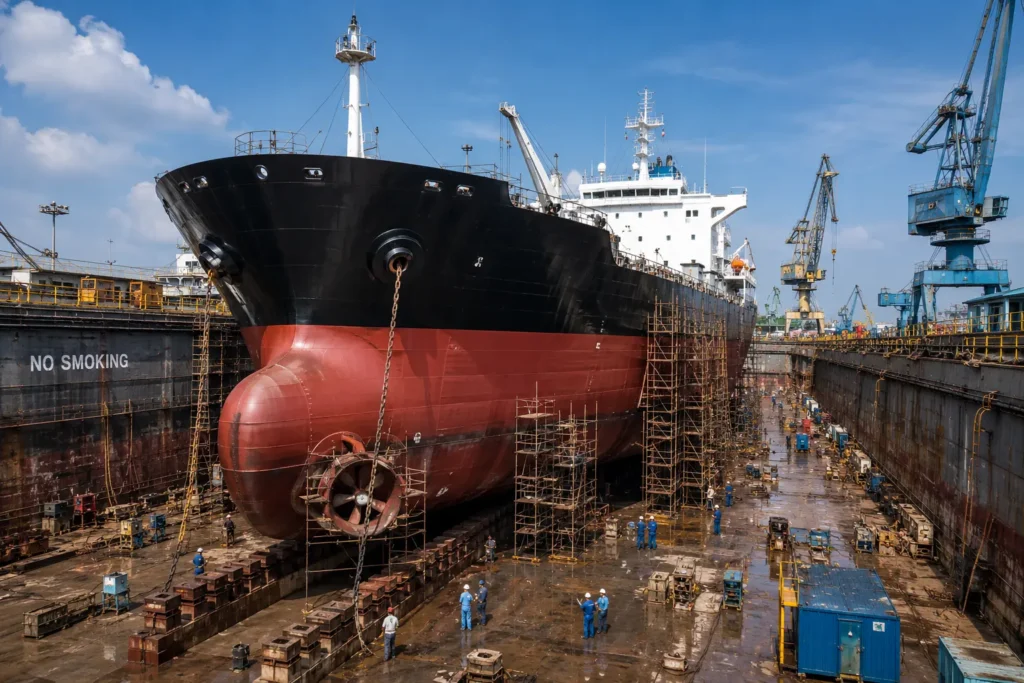
Shipbuilding requires much more than knowledge of hull fabrication. It involves production planning, steel processing, welding, block construction, hull erection, piping, machinery installation, electrical systems, outfitting, painting, inspection, testing and commissioning.
Our 50-module training portfolio is designed around these real shipyard activities, giving learners the opportunity to develop a broader understanding of the complete construction process.
50 Modules. One Complete Shipbuilding Pathway.
The learning pathway can take learners through key ship construction activities including:
Shipyard Fundamentals — shipyard organization, construction stages, production workflow, drawings and shipbuilding terminology.
Steel & Hull Construction — material preparation, plate processing, cutting, forming, fit-up, welding, panel fabrication and hull assembly.
Block Construction & Erection — sub-assemblies, panels, blocks, dimensional control, lifting, alignment, joining and hull erection.
Welding & Fabrication — welding processes, procedures, consumables, weld quality, distortion control and fabrication practices.
Marine Systems Installation — piping, machinery, propulsion, electrical systems, HVAC, ventilation and other onboard systems.
Outfitting & Accommodation — deck equipment, interior spaces, foundations, access arrangements, insulation and shipboard outfitting.
Surface Treatment & Corrosion Protection — blasting, surface preparation, coating systems, painting and corrosion-control practices.
Inspection & Quality Control — dimensional inspection, welding inspection, NDT, quality documentation, testing and compliance.
Testing & Commissioning — system testing, machinery trials, harbour trials, sea trials, troubleshooting and final commissioning.
Production Management — construction planning, scheduling, productivity, material control, work sequencing, safety and shipyard coordination.
Designed Around Shipyard Careers
The programs are intended to develop practical knowledge for people entering or progressing within the shipbuilding industry.
Whether the learner wants to work in hull fabrication, welding, production, shipyard supervision, piping, machinery installation, electrical installation, outfitting, inspection, quality control or construction management, the 50-module structure provides multiple pathways to build specialized capability.
From Steel Plate to Sea Trials
The greatest strength of this vertical is its end-to-end perspective.
Learners can understand how individual activities connect: how steel becomes panels, panels become blocks, blocks become a hull, systems are installed and integrated, inspections are performed, and the completed vessel progresses toward testing and sea trials.
This helps transform isolated technical skills into a practical understanding of the shipbuilding production system.
Build Skills. Enter the Shipbuilding Industry.
The 50 Ship Construction Training Modules are designed for students, technicians, tradespeople, supervisors, engineers and professionals seeking to enter, strengthen or specialize in shipbuilding careers.
Explore the Ship Construction Vertical and choose the modules that match your career, technical specialization or shipyard requirement.
Your Career Does Not Have to Stop at One Skill
The maritime industry is multidisciplinary.
The more you understand how different shipbuilding activities connect, the better you can communicate with other teams, understand production problems and contribute to complex projects.
That is why we encourage learners to think beyond a single certificate or single technical skill.
Start with one course. Build another skill. Then expand your knowledge across the shipbuilding process.
Over time, you can develop a much stronger understanding of the industry and the technologies that support modern ship construction.
Explore. Learn. Build Your Expertise.
Whether you are a student looking for your first opportunity, an engineer seeking specialization, a technician upgrading skills, a professional planning a career move, or a company developing its workforce, Pertecnica Engineering gives you the flexibility to choose the right training path.
Explore our Shipbuilding Courses Full Catalogue and identify the course that matches your immediate goal.
Come Join Us
We promise you, you won’t find this breadth and depth of shipbuilding training anywhere else in the world.