Port, Harbour & Terminal Safety
Safety Across the Entire Port Operating Environment
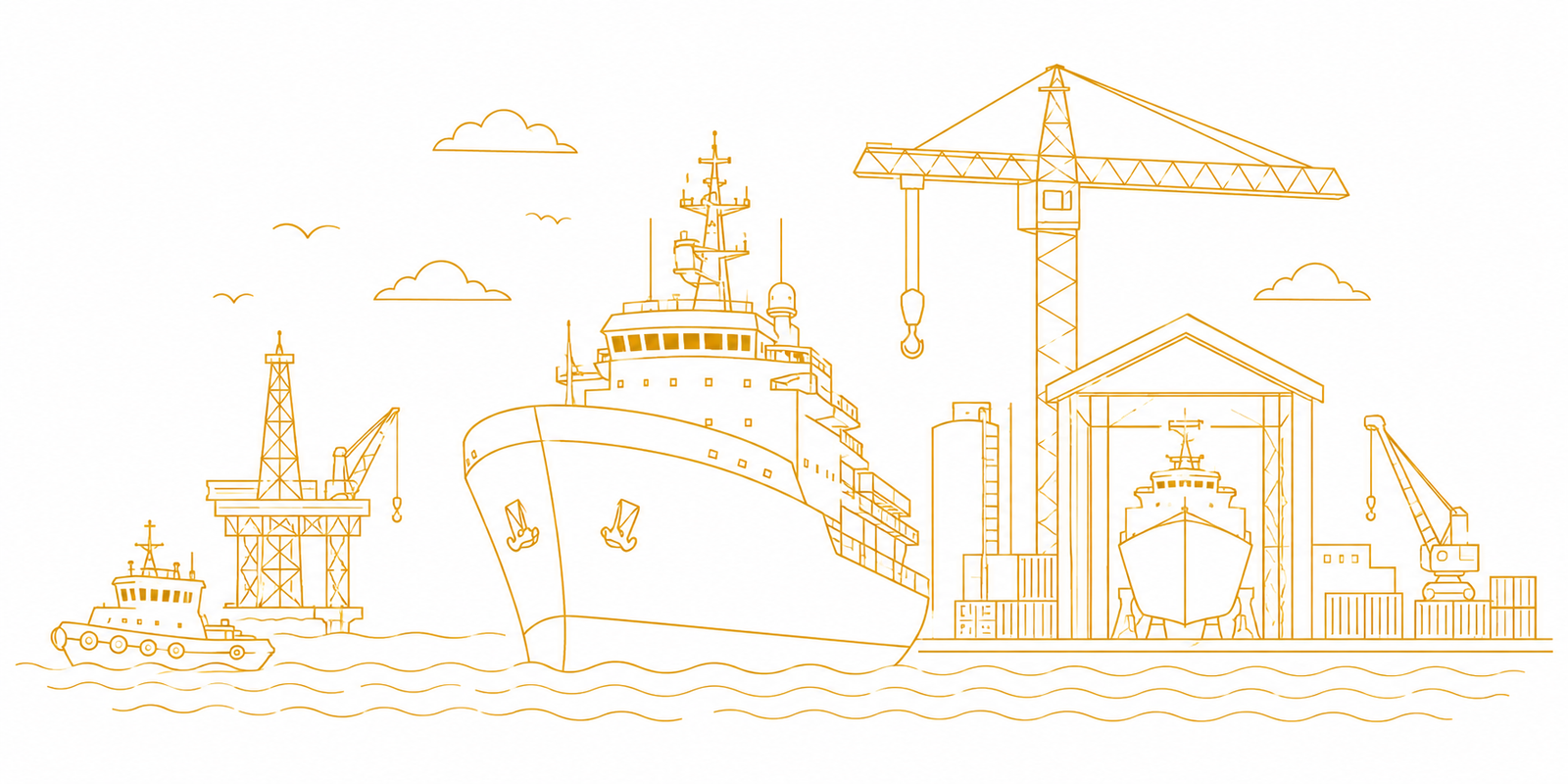
A port is a city of industrial activity concentrated around the water. Ships arrive and depart, cargo moves continuously, heavy equipment operates around people, vehicles share restricted spaces, hazardous materials are handled, and marine and land-based operations take place side by side.
That environment demands a specialized approach to safety.
Pertecnica Marine Academy’s Port, Harbour & Terminal Safety Vertical is designed to develop safety capabilities across the complete port environment — from vessel arrival and berthing to cargo handling, terminal operations, maintenance, emergency response and departure.
One Port — Multiple Risk Environments
Safety requirements change from one area of a port to another. Our training approach follows these operational zones, helping learners understand the specific hazards and controls associated with each.
Marine Interface
Vessel arrival, pilotage interfaces, berthing, mooring, unmooring, gangways, ship-shore coordination and working around water.
Cargo & Terminal Operations
Container handling, bulk cargo, break-bulk operations, cargo transfer, loading and unloading, storage areas and terminal workflows.
Heavy Equipment & Lifting
Cranes, reach stackers, forklifts, conveyors, lifting accessories, mobile equipment, lifting operations and equipment-related hazards.
Yard & Traffic Safety
Internal roads, vehicle movement, pedestrian segregation, traffic management, restricted zones, parking and operational access.
Hazardous Cargo
Dangerous goods, chemical handling, fuel operations, hazardous materials, storage requirements, spill prevention and emergency procedures.
Marine Construction & Maintenance
Working around quays, piers, jetties, dredging operations, construction zones, maintenance activities, temporary works and contractor safety.
Work at Height & Confined Spaces
Tanks, silos, cargo spaces, enclosed areas, elevated structures, access systems and fall-prevention practices.
Emergency Readiness for Port Operations
Port emergencies can develop rapidly and may involve multiple organizations simultaneously.
Training can address fire, explosion, oil and chemical spills, vessel incidents, cargo accidents, equipment failures, man-overboard situations, flooding, severe weather and other emergency scenarios.
The emphasis is on understanding emergency organization, communication, evacuation, first response, coordination and recovery.
Safety Is a System
A safe port cannot depend only on individual caution. It requires systems that connect people, equipment, procedures and infrastructure.
The vertical therefore incorporates subjects such as:
- Risk assessment and hazard identification
- Permit-to-work systems
- Lockout/tagout
- Toolbox talks and safety briefings
- Personal protective equipment
- Contractor and visitor safety
- Marine traffic and vessel-interface safety
- Lifting and crane safety
- Electrical and mechanical safety
- Fire prevention and emergency response
- Environmental and spill response
- Incident and near-miss reporting
- Safety inspections and audits
- Emergency preparedness
- Safety management systems
- Occupational health and workplace safety
Training for Everyone Who Works Around the Port
Port safety is a shared responsibility.
The learning ecosystem can support terminal operators, port personnel, cargo-handling teams, crane and equipment operators, marine contractors, maintenance teams, supervisors, safety professionals, engineers, security personnel and management.
Individual modules can build specific competencies, while broader learning pathways can develop a more complete understanding of port and terminal safety.
From the Berth to the Gate
Our objective is to cover the complete operational chain:
Vessel → Berth → Cargo Operation → Terminal → Yard → Transport Interface
At every stage, learners can identify the hazards, understand the controls and recognize the responsibilities required to maintain safe operations.
Building Safer Ports and Terminals
Modern ports are becoming larger, faster and more technologically complex. Their safety systems must evolve accordingly.
Pertecnica Marine Academy aims to support this transformation by developing a specialized workforce capable of understanding and managing the risks of modern port, harbour and terminal operations.
Train for the risk. Prepare for the emergency. Operate safely.
Explore the Port, Harbour & Terminal Safety Vertical and build the skills required for safer, more resilient maritime infrastructure and operations.